Shop









A Georgetown Railroad House, Transformed With Light and Love
Designer Azali Kassum reimagines her family’s 1800s Georgetown railroad home—preserving its layered history while creating a light-filled, livable space for a modern, growing family.
When designer Azali Kassum and her husband purchased their 1790s Georgetown home, they saw more than just a quirky semi-detached railroad house with a vertical seam running down its brick facade—they saw potential. With three young children and a deep appreciation for craftsmanship, the couple set out to create a space that felt both rooted and renewed. Over the course of eight years, they worked with architect Christian Zapatka to preserve the home’s original details, like the heart pine floors and exposed ceiling beams, while opening up the layout and bringing in much-needed natural light. The home is now especially striking, layered with vintage finds, modern touches, and thoughtful design that honors the past without living in it.
Design: Azali Kassum | Architect: Christian Zapatka | Photography: Jennifer Hughes
Reworking a Railroad Layout
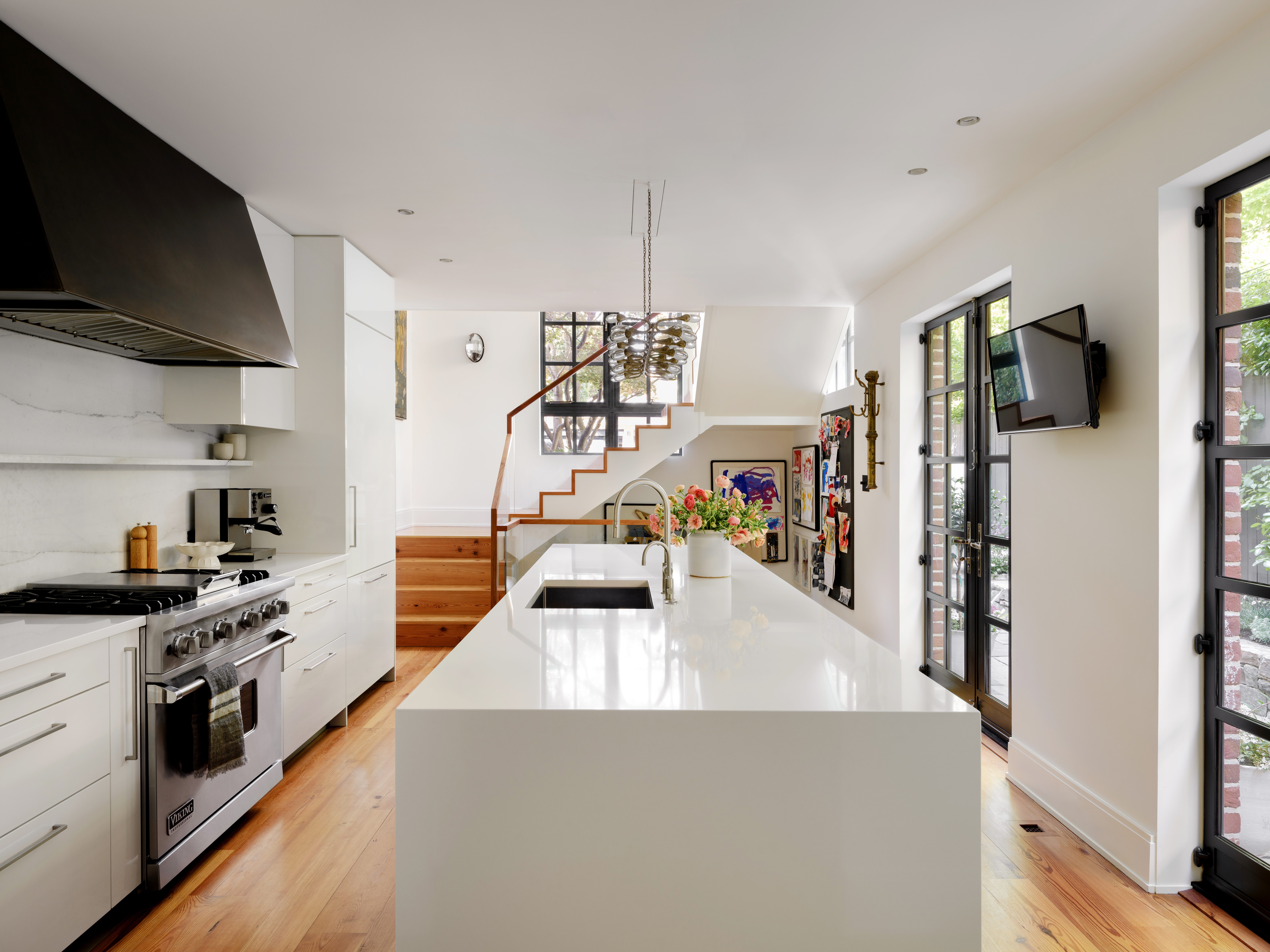
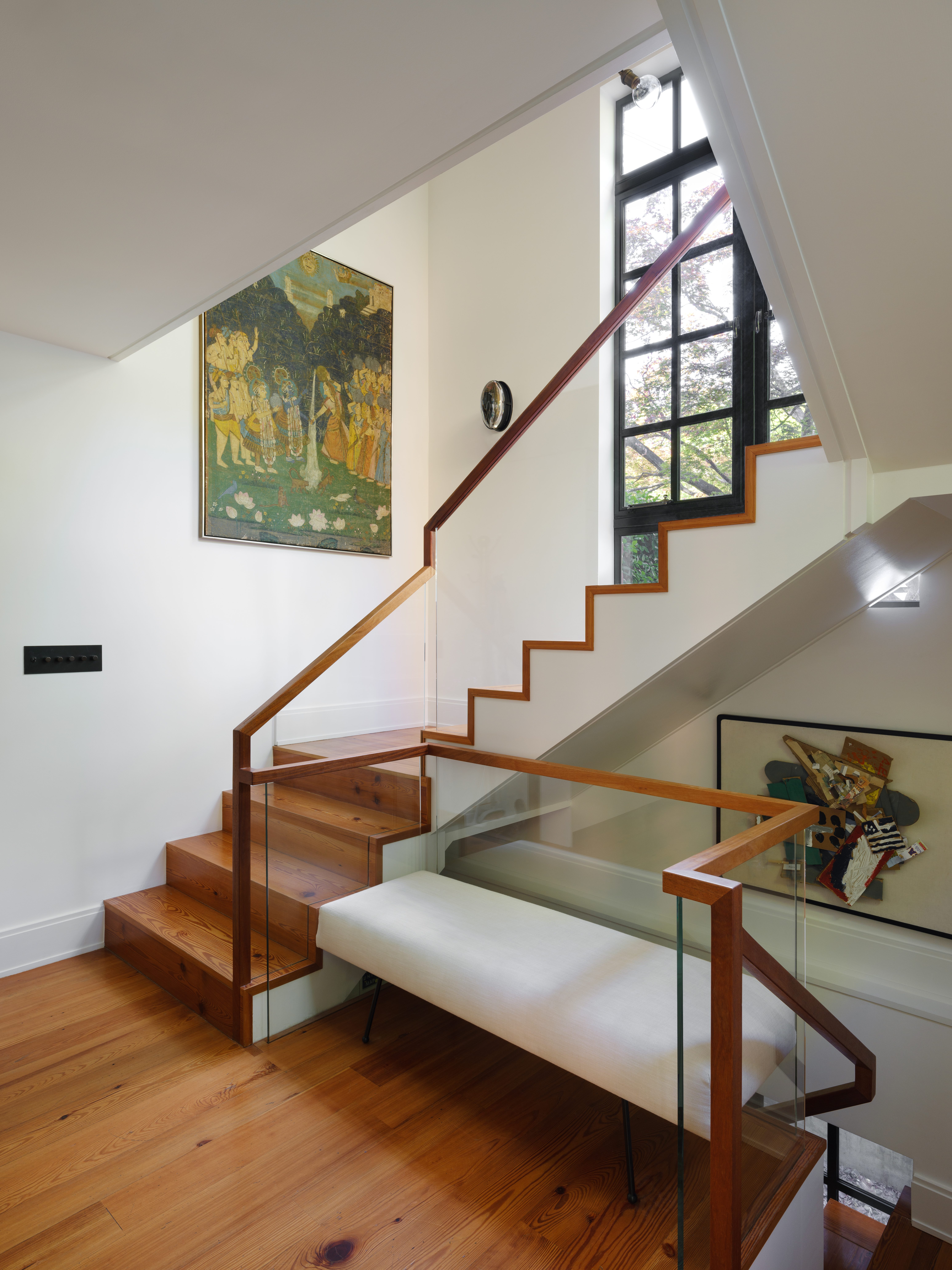
The original structure (a narrow, semi-detached railroad-style home) was once dark and disjointed, typical of 19th-century layouts. Azali’s first priority was light. Collaborating with the architect, they reworked the plan to bring brightness into every room, culminating in a 600-square-foot rear addition outfitted with steel casement doors and dramatic glass railings around a floating staircase. Throughout the home, walls were simplified, sightlines were opened, and sunlight was allowed to move freely. The palette, grounded in soft whites like Benjamin Moore’s Chantilly Lace and Simply White, became a tool to amplify natural light rather than compete with it.

Preserving the Past
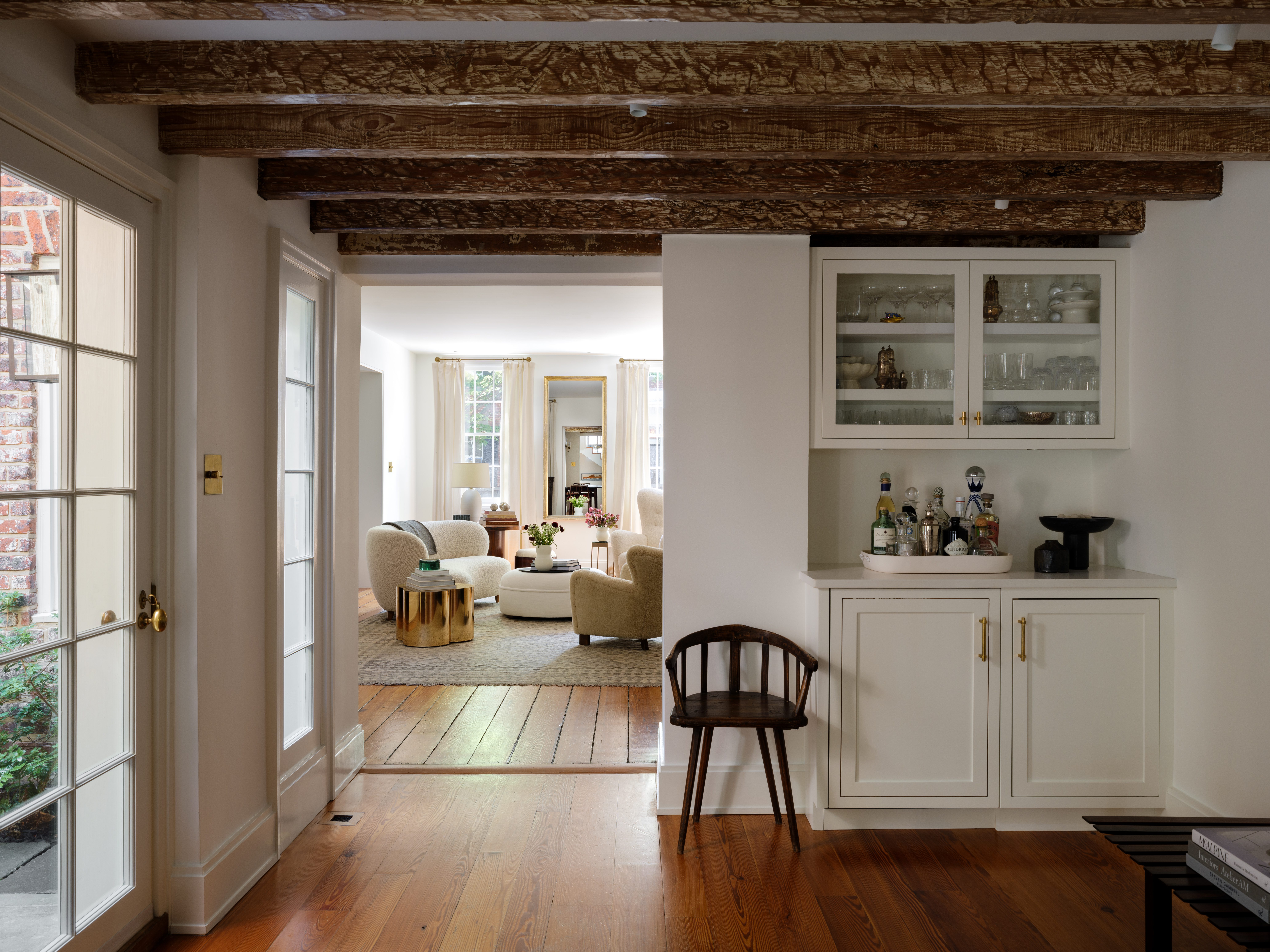
Rather than starting from scratch, Azali took a preservationist’s approach. The couple restored original brick, plasterwork, and heart pine flooring throughout the 3,000-square-foot home. The patina of the materials is what gives the space soul. That ethos extended to the dining room, where exposed ceiling beams were stripped back to their natural finish and now hover above vintage Niels O. Moller dining chairs. Outside, a surprising historic artifact: a 19th-century lift’s wheeled mechanism found in the ceiling during demolition was transformed into a garden sculpture that now anchors the bluestone patio.

A Home Rooted in Vintage, Material, and Texture
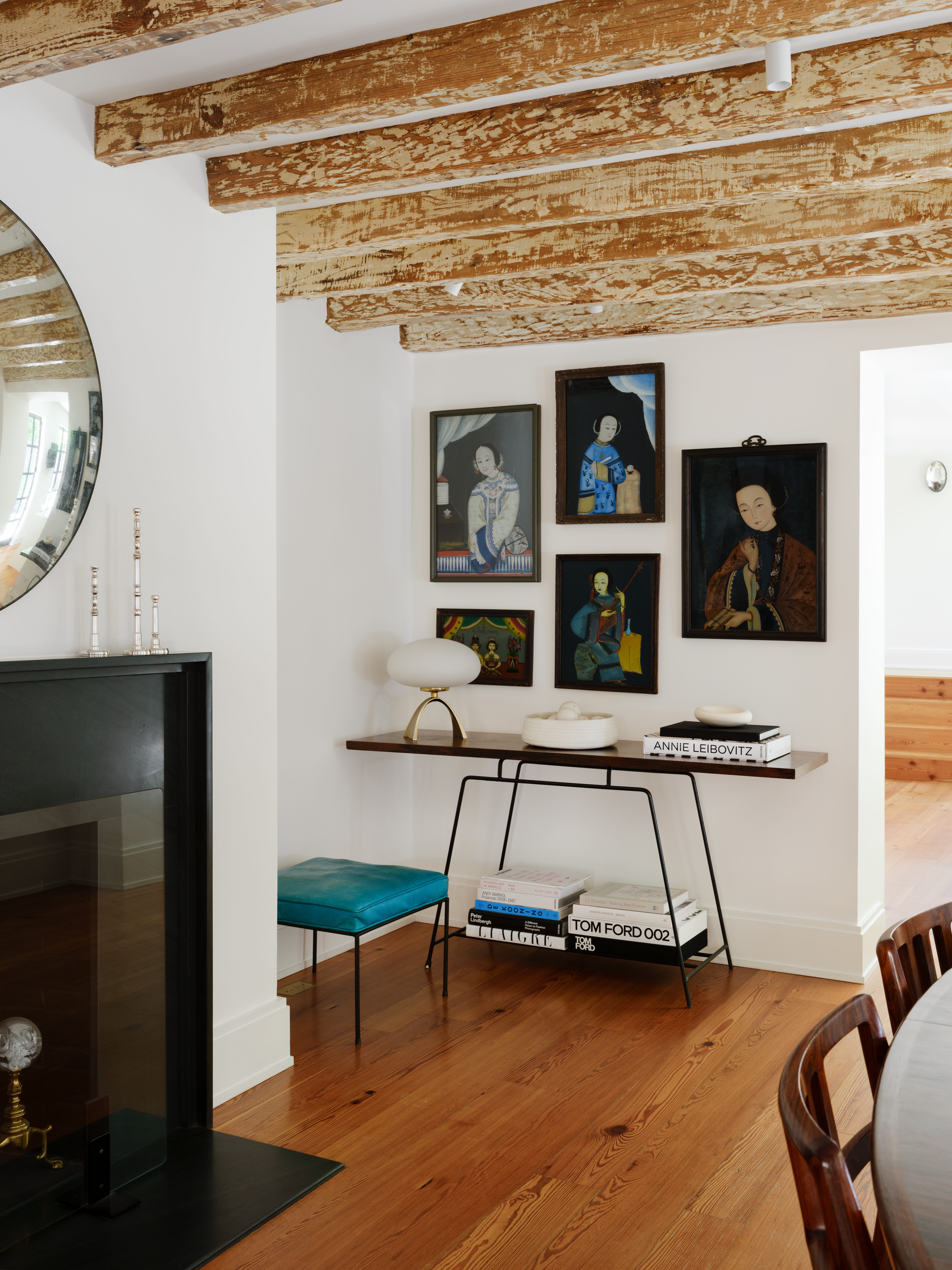
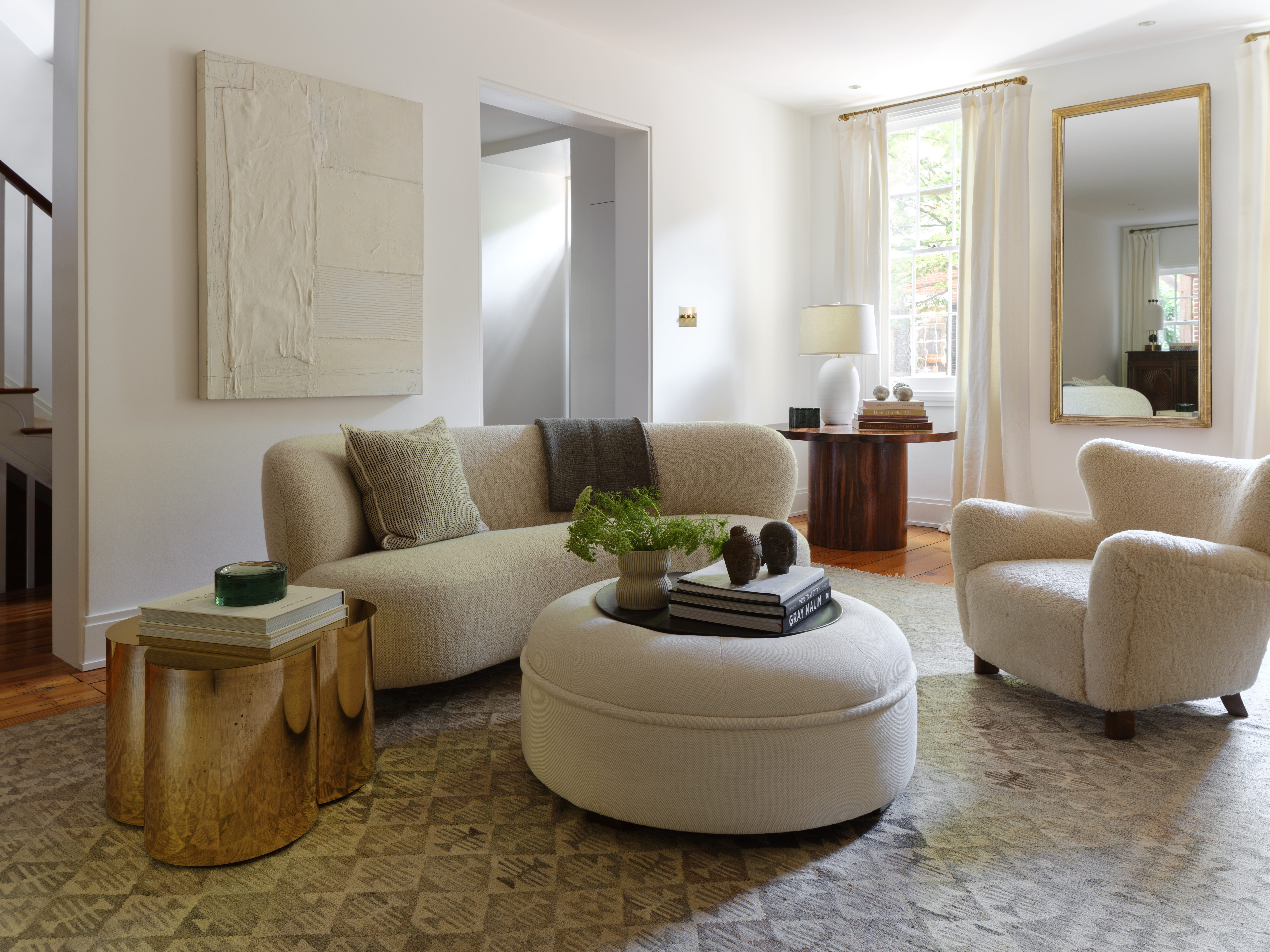
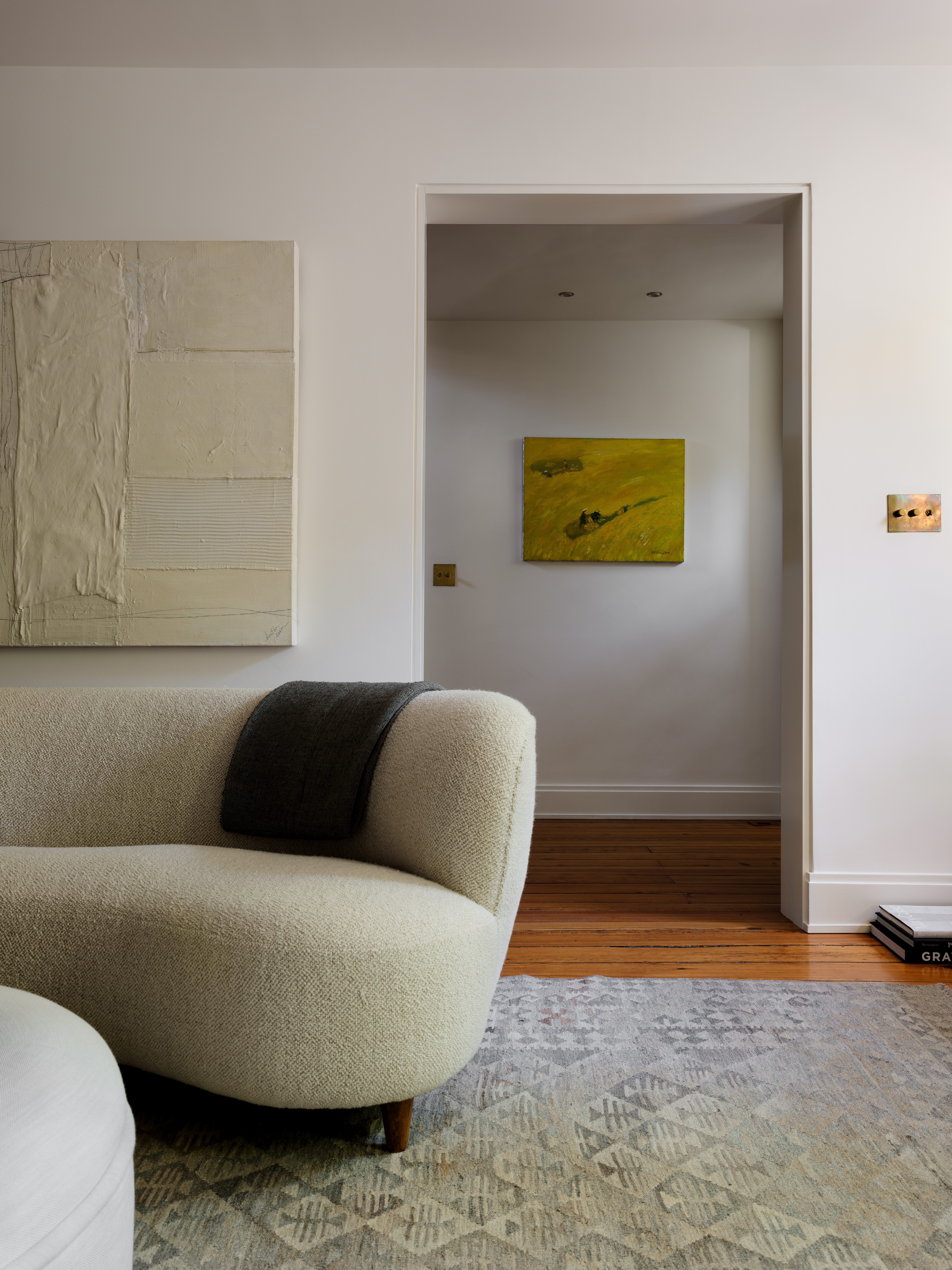
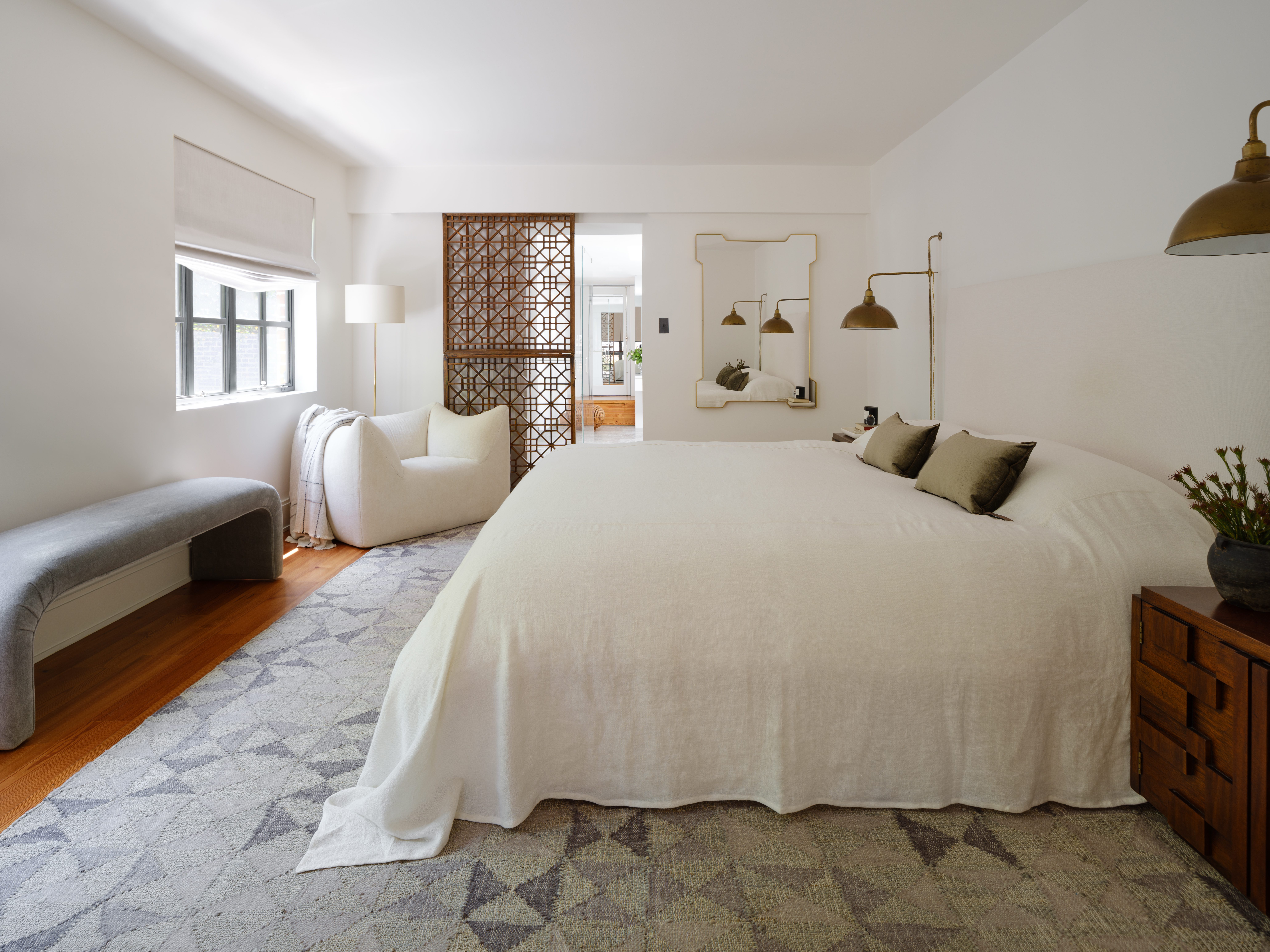
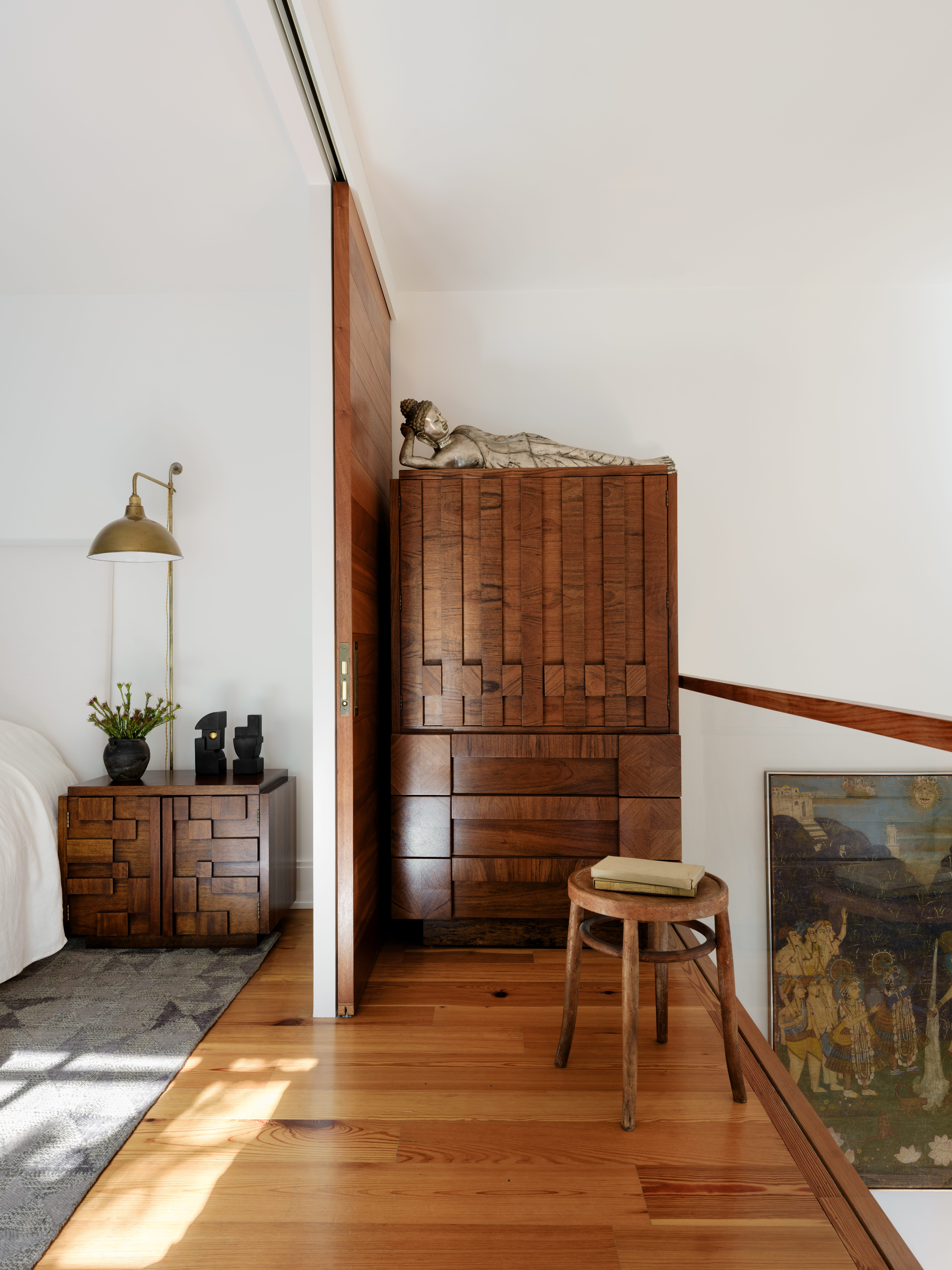
Azali’s design instincts lean toward restraint, allowing the home’s materials and natural light to take center stage. But that doesn’t mean the space lacks personality. A global collection of mid-century treasures from 1st Dibs infuses texture and quiet drama throughout: 1940s club chairs in shearling, a Danish modern rosewood game table, Fritz Hansen’s high-back lounge chair, and a curved 1950s Danish sofa all make appearances.


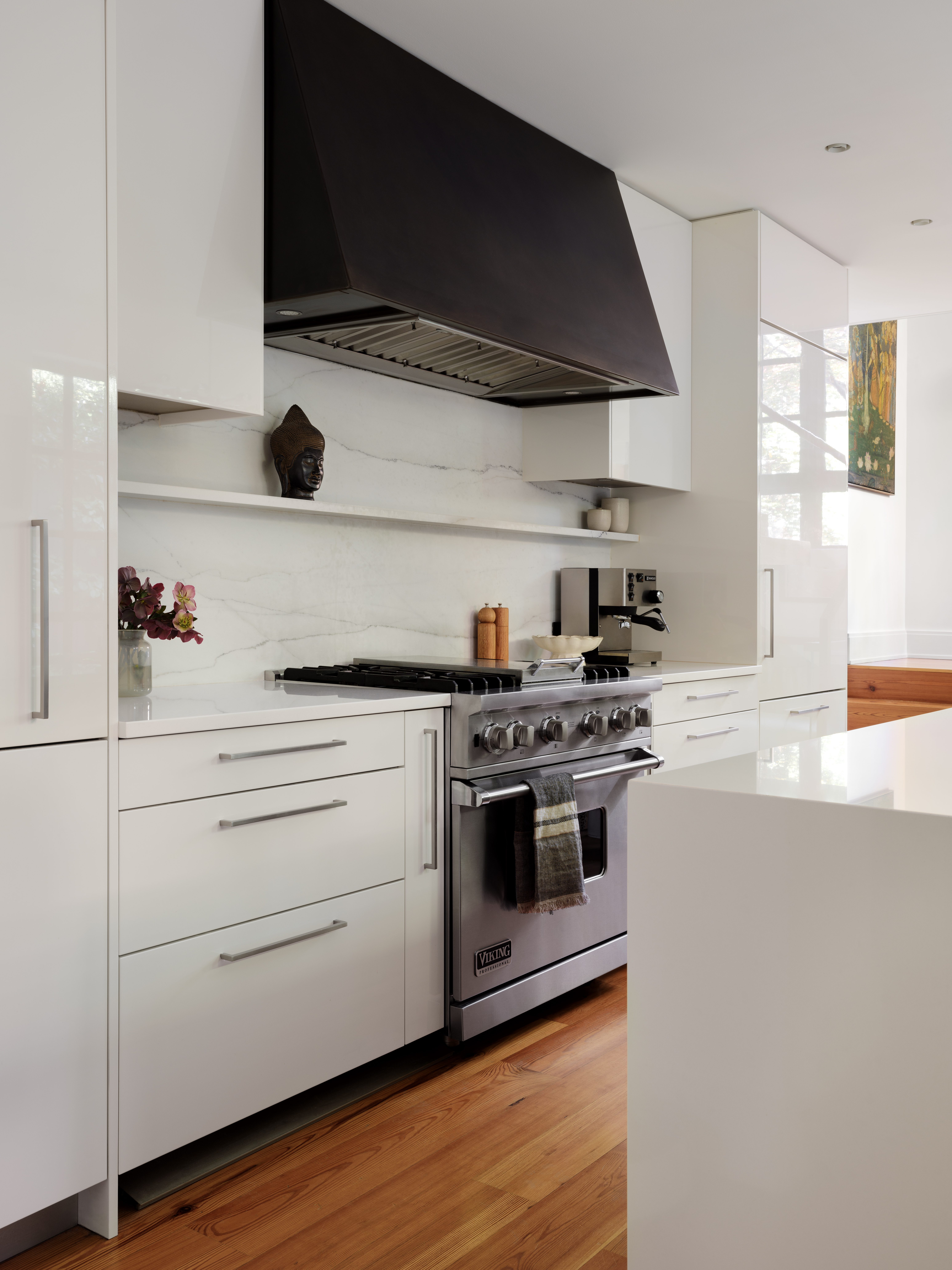
A standout moment? The kitchen’s Damselfly Linear Chandelier by OCHRE floats above Snaidero cabinetry and reclaimed pine floors, which is an earthy counterbalance to the room’s polished geometry.

A Home That Grows With the Family
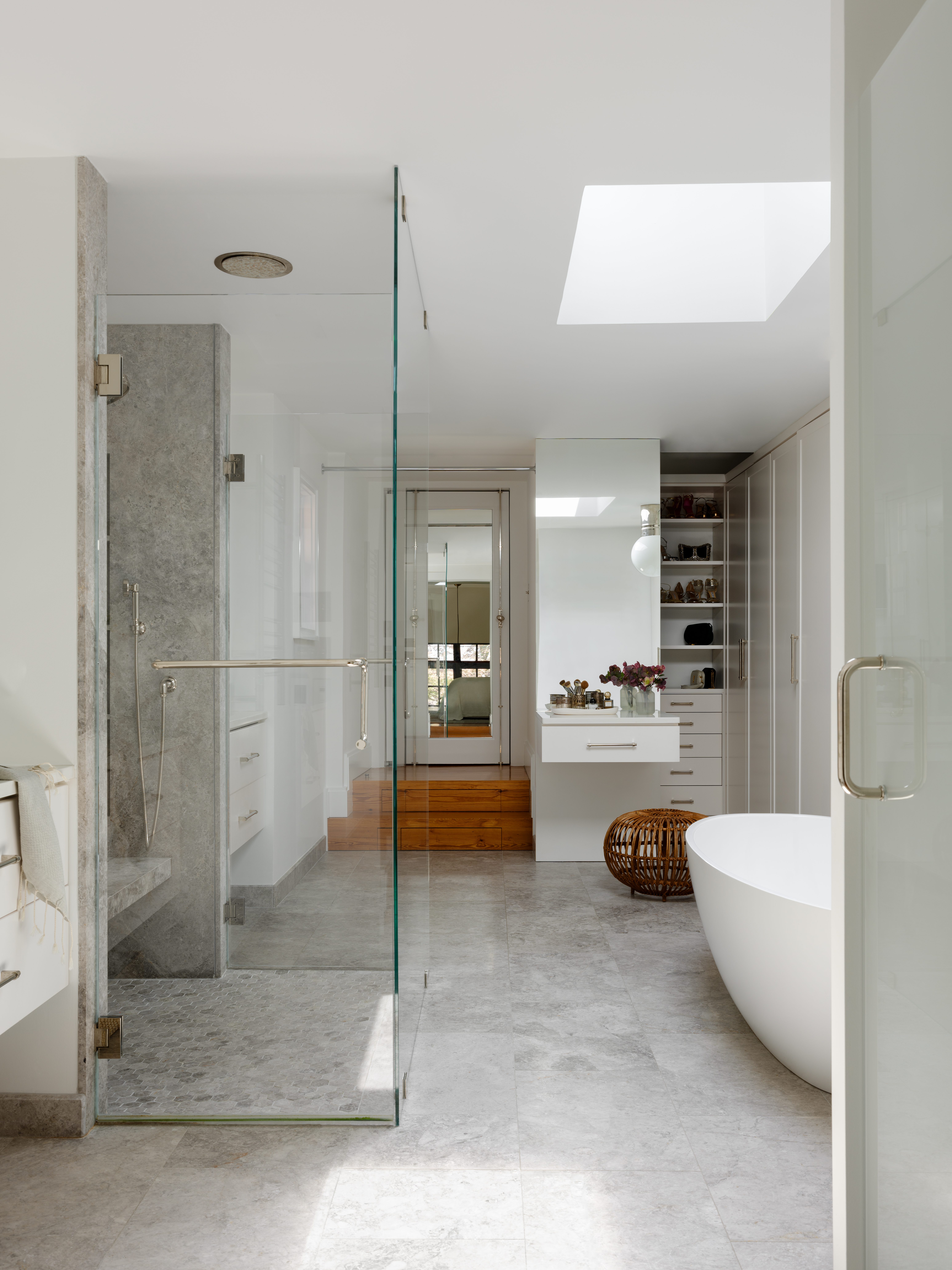
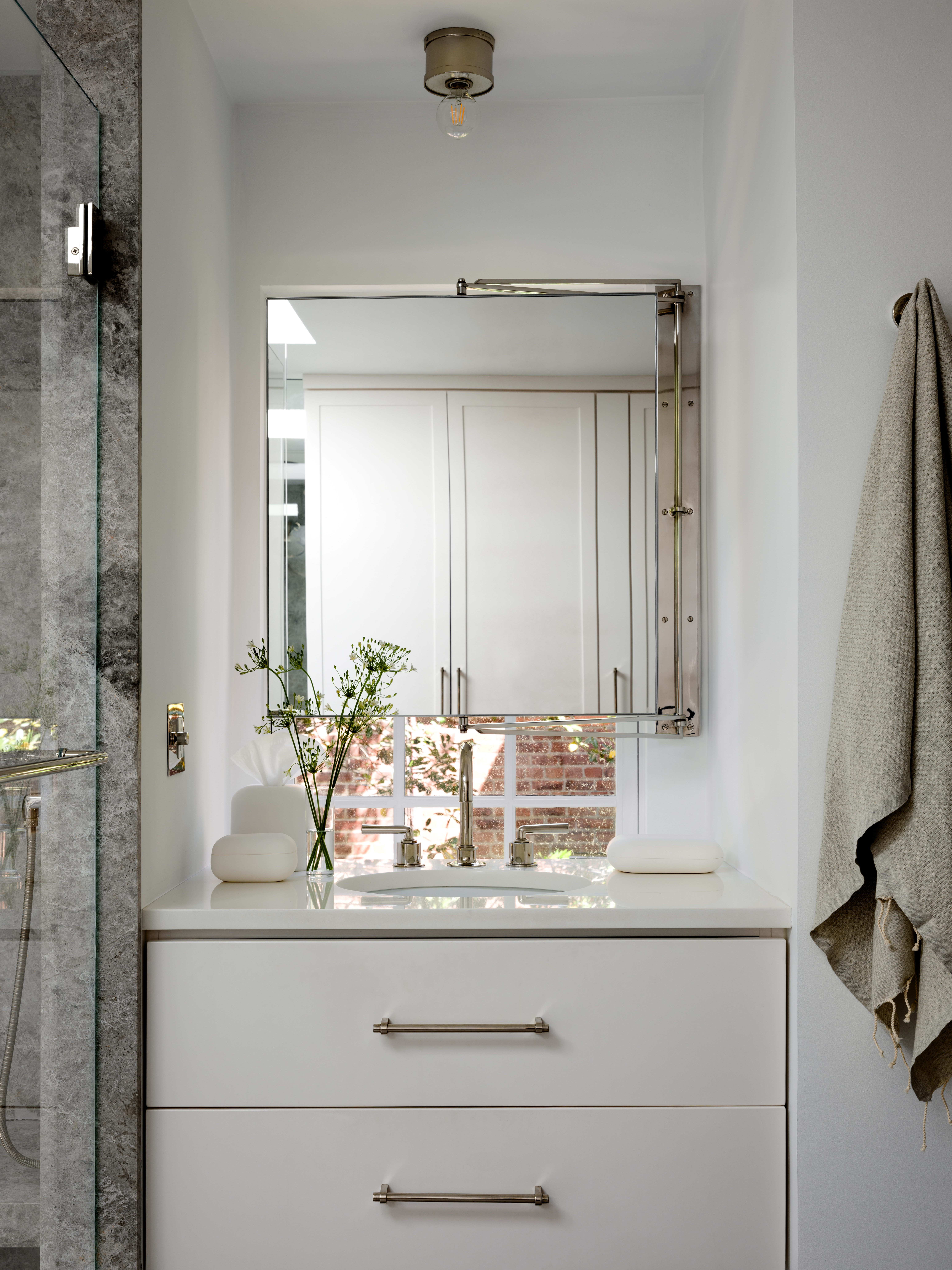
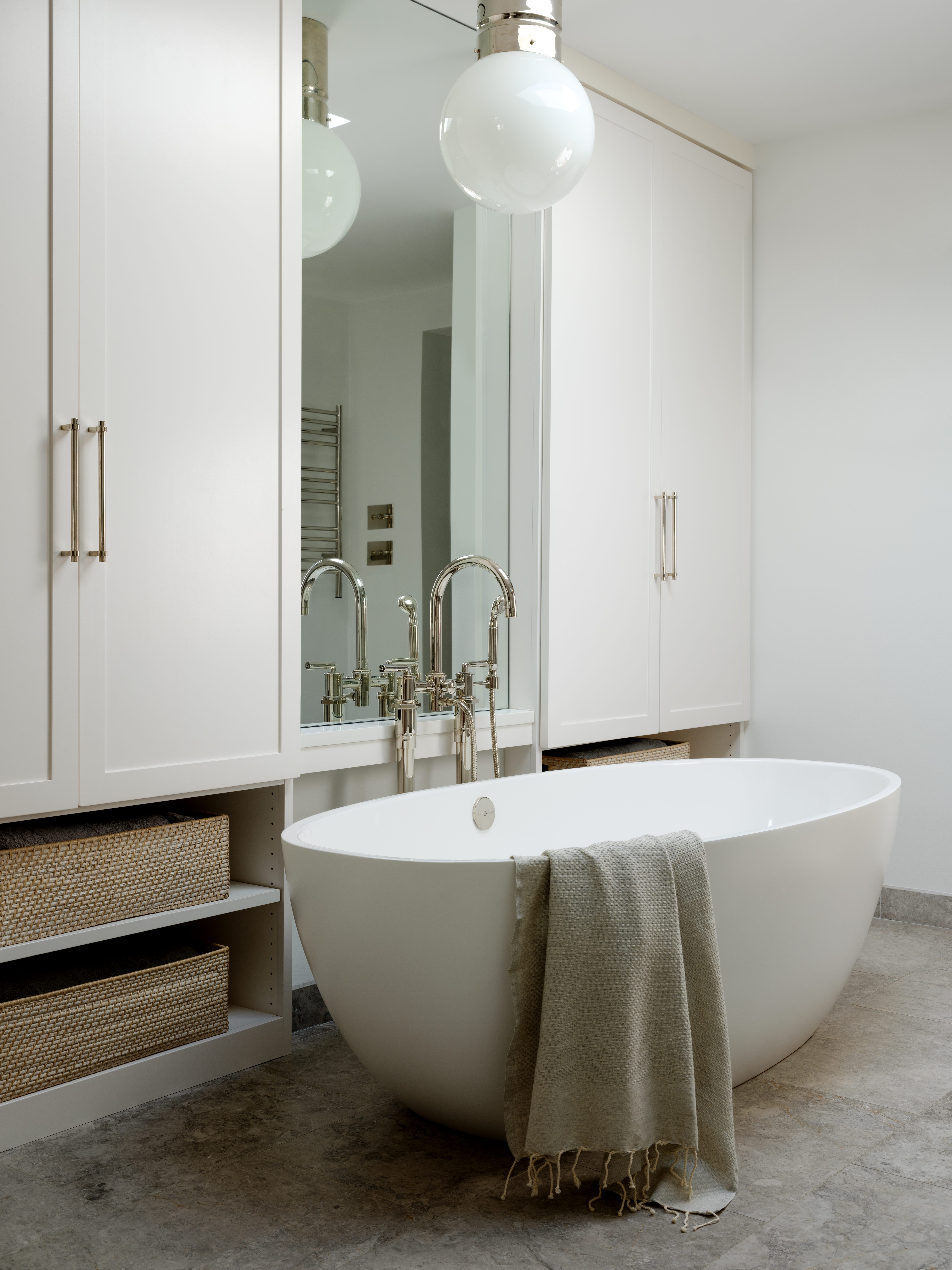
Though the aesthetic is refined, this is first and foremost a family home. Azali and her husband designed the space to evolve with their three kids, creating a home that flexes along with their family’s changing rhythms.. The furniture is durable yet never dull, and thoughtful design moments are scattered throughout, like the Waterworks Sten Vessel sink in the powder room, set on a custom metal stand that Azali designed herself. Lighting by Allison Berger and Urban Electric Company adds softness and glow across key spaces. And somehow, that vertical seam down the facade, the one that hints at all the additions over the years, now feels more like a badge of honor than an imperfection.

Scroll on to see more from this space and shop the look below.





BY: Daniela Araya
Shop